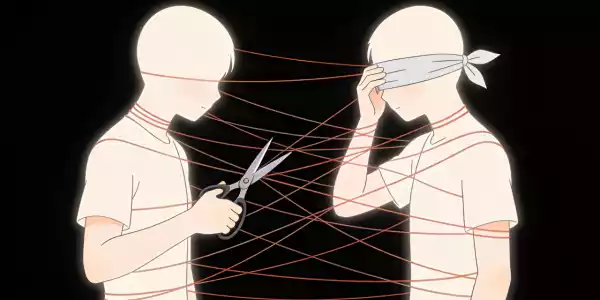
Love-Struck Test: 10 Dimensions to Reveal Your Emotional Toxicity Level

The Love-Struck Test is designed to explore and quantify your level of emotional involvement in relationships. It scientifically assesses your tendencies across ten core dimensions: Loss of Self, Over-Devotion, Emotional Parasitism, Filter Idealization, Fantasy Fulfillment, Possessive Monitoring, Love-Centrism, Abandonment Anxiety, Codependency, and Self-Obsessed Martyrdom.

Have you ever felt that the harder you try in love, the further you get from happiness? Do you wonder why you lose yourself the moment you fall in love? Is it devotion or addiction? This test will clear the fog for you—take it now!

What is the Love-Struck Depth Test?

The Love-Struck Depth Test is a psychological assessment tool designed to evaluate emotional involvement and irrational tendencies in romantic relationships. This test aims to strip away the sentimental exterior to help you examine: Has your devotion evolved into emotional exploitation of others or chronic self-destruction? It doesn’t just assess your current state; it serves as a rigorous audit of your intimacy logic to trace the root of your emotional patterns.

This test covers 10 core dimensions, from your source of mood swings to the clarity of your self-boundaries. Through a percentage-based map, you can identify blind spots and regain the balance between emotion and logic.

How to Interpret Your Love-Stricted Test Results?

After completing the test, you will see your distribution across ten dimensions: Loss of Self, Over-Devotion, Emotional Parasitism, Filter Idealization, Fantasy Fulfillment, Possessive Monitoring, Love-Centrism, Abandonment Anxiety, Codependency, and Self-Obsessed Martyrdom.

If your distribution is balanced (each dimension between 0%-40%): You possess excellent emotional intelligence, stable boundaries, and a healthy attachment style.

If a clear "peak" appears (any item exceeding 70%): This is your Emotional Breaking Point. Please read the detailed analysis of that dimension to better understand your current state and initiate change.

Please note: The percentages aren’t meant to judge you, but to show you where parts of your 'self' have been lost. Romantic intensity isn’t inherently bad—it’s the source of passion—but when a dimension goes off the charts, it’s a signal of psychological imbalance.

Is 'Love-Brain' caused by being too kind or too sensitive?

This is a common misconception. In reality, the essence of being 'love-struck' to an unhealthy degree isn’t emotional overload, but psychological compensation. Many people use intense relationships to compensate for a lack of praise, attention, or control experienced during their upbringing.

When you try to 'earn' love through extreme sacrifice, it isn’t kindness—it’s a transaction. When you can’t stop fantasizing, it’s not sensitivity—it’s a way to use dopamine to numb the pain of a barren reality. Understanding this is the key: The first step to healing is not cutting off all emotion, but filling the gaps in your own life.

Detailed Explanation of Dimensions

Loss of Self

Loss of self is the most subtle yet fatal dimension. It is essentially a total collapse of personal boundaries. In a healthy relationship, two people should be like two circles that overlap but remain distinct. When this score is high, you reflexively make your partner the center of your universe. This stems from a misunderstanding of intimacy as 'becoming one,' leading to the atrophy of your social circle, career goals, and personal tastes. When you stop asking 'What do I want?' and only care about 'Who do they want me to be?', you lose your independence and become an appendage. Ironically, as you lose your uniqueness, the very charm that attracted your partner withers away, leading to a vicious cycle of being 'more humble, yet less loved.' Reclaiming your center is vital for self-preservation and mutual respect.

Typical Characteristics:

  • Your first thought before any decision is whether your partner will approve.
  • Cutting off social ties or hobbies just to fit your partner’s schedule.
  • Changing your style, diet, or interests solely to please them.
  • Habitually compromising in conflicts at the cost of your dignity.

Over-Devotion

Over-devotion often stems from a sense of inadequacy rather than generosity. Subconsciously, you may feel your true self isn’t 'enough,' so you try to 'buy' love through excessive material or emotional output. This 'savior' or 'drain-yourself' logic turns romance into an imbalanced labor contract. You might overextend your finances, energy, or health to fill every void in your partner’s life. However, human nature has a compensation mechanism: when the giving exceeds a certain threshold, the receiver often feels a moral debt and reacts by withdrawing or becoming cold. It also robs the partner of the chance to contribute, eventually turning your devotion into a form of pathologically controlling behavior. True love requires reciprocity, not self-depletion.

Typical Characteristics:

  • Giving gifts far beyond your financial means to prove your love.
  • Handling all of your partner’s life admin like a parent.
  • Responding to a partner’s mistakes or coldness with even more devotion.
  • Prioritizing their minor requests even when you are busy or ill.

Emotional Parasitism

This means you have surrendered all 'emotional autonomy.' Your psychological defense system is entirely tethered to your partner’s actions. You are no longer the master of your mood, but a puppet: a kiss makes your day, while a delayed reply sends you into a spiral. This high sensitivity suggests you view your partner as your only life-support system. You cannot tolerate emotional 'dead air' and need constant interaction to feel secure. This leads to social and professional dysfunction and puts immense pressure on your partner to be 'perfect' at all times. Learning to process loneliness and negative emotions independently is the only way toward emotional maturity.

Typical Characteristics:

  • Feeling panicked or distracted if a reply is delayed.
  • Mood fluctuates entirely based on their tone of voice.
  • Catastrophizing their every move, leading to endless mental exhaustion.
  • Life feels dull and meaningless whenever they aren’t around.

Filter Idealization

This is a logical disconnect that makes you fall in love with a glorified phantom. You activate a defense mechanism that automatically filters out red flags like selfishness or irresponsibility. You rationalize their flaws by saying 'they had a hard childhood' or 'that’s just their personality.' You aren’t just deceiving them; you are deceiving yourself. This blind worship is often a projection of your own needs onto someone who doesn’t meet them. When reality eventually breaks the filter, the disillusionment is devastating. Learning to see a partner’s behavior objectively is your only defense against emotional fraud.

Typical Characteristics:

  • Instinctively defending them when friends point out serious flaws.
  • Interpreting coldness or manipulation as just a 'personality quirk.'
  • Ignoring obvious lifestyle incompatibilities, believing you are 'soulmates.'
  • Believing they are perfect and the only 'pure' soul in a cynical world.

Fantasy Fulfillment

High scorers in this dimension are dating their own imagination. Common in long-distance or early-stage relationships, you take tiny fragments of information and weave a complex romantic script. You might be planning a wedding in your head before checking if your core values actually align. You are in love with the 'destiny' and the 'story' rather than the person. This leads to massive misjudgments; you think they are your soulmate, but you’re just projecting your desires. When they act out of character from your mental script, you feel a deep sense of betrayal. Real love is built on knowing the actual person, not a fictional persona.

Typical Characteristics:

  • Visualizing a whole life together shortly after meeting.
  • Enjoying the 'idea' of the relationship more than the actual interaction.
  • Applying labels like 'fate' or 'destiny' to every coincidence.
  • Feeling betrayed when the real person doesn’t act like your mental version.

Possessive Monitoring

This reflects a profound lack of security and a near-pathological desire for exclusive control. In this state, you don’t move closer out of love, but out of fear. You view your partner as private property, and any 'unaccounted for' time triggers catastrophic thoughts of betrayal. This leads to checking phones, limiting their social life, and constant 'check-ins.' But love is about free choice, not imprisonment. The more you monitor, the further you push them away. This behavior destroys their freedom and your peace of mind. Healing comes from addressing your inner insecurity rather than controlling others.

Typical Characteristics:

  • Strong urge to check their phone, social media, and call logs.
  • Inability to tolerate them having friends of the opposite sex.
  • Anxiety and suspicion regarding any time they spend alone.
  • Believing love means having no secrets and no private space.

Love-Centrism

This marks a total collapse of your personal value system. In a healthy psyche, love is an important part of life, but not the whole. When this dimension is too high, you see the relationship as your only source of salvation. You might cut off your own path—giving up promotions or losing friends—just to protect the relationship. Putting all your chips on one person makes your life incredibly fragile. If the relationship wavers, your entire world—financial, social, and mental—suffers an earthquake. Diversifying your life’s focus is the only way to build a resilient and clear-headed relationship.

Typical Characteristics:

  • Believing that nothing else (work/school) matters compared to love.
  • Willingness to drop career opportunities just to stay near a partner.
  • Losing interest in personal growth or social issues.
  • Feeling that life would be completely over if the relationship ended.

Abandonment Anxiety

This is the deepest psychological layer of the 'love-struck' brain, often rooted in early trauma. You are terrified of any sign of 'the end,' driving you to become a people-pleaser. Because you are afraid of being left, you stay in toxic or harmful relationships far longer than you should. You constantly walk on eggshells, compromising your boundaries just to keep them from leaving. This submissiveness often leads to you being taken for granted. Only when you believe you can thrive alone will you have the strength to stand tall in a relationship.

Typical Characteristics:

  • Forgiving serious betrayals or lies just so they don’t leave.
  • Never making demands or expressing needs for fear of being a 'burden.'
  • Using begging or extreme measures to stop a breakup.
  • Viewing being single as an ultimate personal failure.

Codependency

Codependency marks a regression in both mental and functional independence. You treat your partner as an extension of yourself, like sharing an operating system. You might have been independent before, but you have since become 'infantilized,' losing the ability to handle stress or daily tasks alone. You view them as your only 'ventilator.' This state creates a suffocating sense of responsibility for the partner, who feels they are carrying a 'giant infant.' Healthy love consists of two independent trees with intertwined roots, not a vine that strangles its host.

Typical Characteristics:

  • Losing confidence in handling daily tasks (repairs, forms, etc.) alone.
  • Relying entirely on their validation to feel any sense of self-worth.
  • Habitually hiding behind your partner rather than expressing your own views.
  • Life rhythm completely falls apart when they are away for a short time.

Self-Obsessed Martyrdom

This is a deceptive, narcissistic form of romantic obsession. In this dimension, you aren’t actually in love with the person; you are in love with the image of yourself as a 'tragic hero' who suffers for love. You enjoy the 'lonely bravery' of your devotion and may even pick unavailable partners just to fulfill this narrative of beautiful suffering. It’s a self-indulgent performance that ignores whether the partner actually needs your 'sacrifices.' It’s a psychological game used to gain moral superiority, but it keeps you far away from real connection. Don’t let cheap drama hide a lack of real capacity for intimacy.

Typical Characteristics:

  • Posting 'deep' or sad social media updates to showcase your devotion.
  • Insisting on 'giving' even after being rejected, viewing it as noble.
  • Enjoying the atmosphere of unrequited love more than a stable result.
  • Prioritizing your persona as a 'devoted lover' over the partner’s actual needs.

References:

  1. Nancy Consuelo Martinez-León, Juan Jose Peña Martin, HernÔn Salazar, Andrea García (August 2017) A systematic review of romantic jealousy in relationships. Terapia Psicologica https://doi.org/10.4067/s0718-48082017000200203
  2. Sandra L Murray, Dale W Griffin, Jaye L Derrick, Brianna Harris, Maya Aloni, Sadie Leder (Apr 5 2011) Tempting Fate or Inviting Happiness?: Unrealistic Idealization Prevents the Decline of Marital Satisfaction. Psychol Sci. https://doi.org/10.1177/0956797611403155
  3. W. Keith Campbell, Craig Foster (April 2002) Narcissism and Commitment in Romantic Relationships: An Investment Model Analysis. Personality and Social Psychology Bulletin https://doi.org/10.1177/0146167202287006
  4. Farnaz Mosannenzadeh, Maartje Luijten, Dominique F MacIejewski, Grace V Wiewel, Johan C Karremans (Aug 27 2024) Adult Attachment and Emotion Regulation Flexibility in Romantic Relationships. Behav Sci (Basel). https://doi.org/10.3390/bs14090758
  5. Phillip R Shaver, Mario Mikulincer, Jude Cassidy (February 2019) Attachment, caregiving in couple relationships, and prosocial behavior in the wider world. Current Opinion in Psychology https://doi.org/10.1016/j.copsyc.2018.02.009
  6. Arthur Aron, Gary W. Lewandowski, Debra Mashek, Elaine N. Aron (01 August 2013) The Self-Expansion Model of Motivation and Cognition in Close Relationships. The Oxford Handbook of Close Relationships https://doi.org/10.1093/oxfordhb/9780195398694.013.0005
  7. Hongwen Song, Yongjun Zhang, Lin Zuo, Xueli Chen, Gui Cao, Federico d怏Oleire Uquillas, Xiaochu Zhang (Jan 11 2019) Improving Relationships by Elevating Positive Illusion and the Underlying Psychological and Neural Mechanisms. Front Hum Neurosci. https://doi.org/10.3389/fnhum.2018.00526
  8. Helen E Fisher, Xiaomeng Xu, Arthur Aron, Lucy L Brown (May 10 2016) Intense, Passionate, Romantic Love: A Natural Addiction? How the Fields That Investigate Romance and Substance Abuse Can Inform Each Other. Front Psychol. https://doi.org/10.3389/fpsyg.2016.00687
  9. Aron, Arthur Aron, Elaine N. Smollan, Danny (1992) Inclusion of Other in the Self Scale and the structure of interpersonal closeness.. Journal of Personality and Social Psychology https://doi.org/10.1037/0022-3514.63.4.596
RelationshipsLoveMental Health TestsNegative PersonalityPersonalityRelationships
Your Love-Struck Test result is:

To see how other people scored on this test, please follow our Facebook Page.

Try again